The 3 AM Shortage
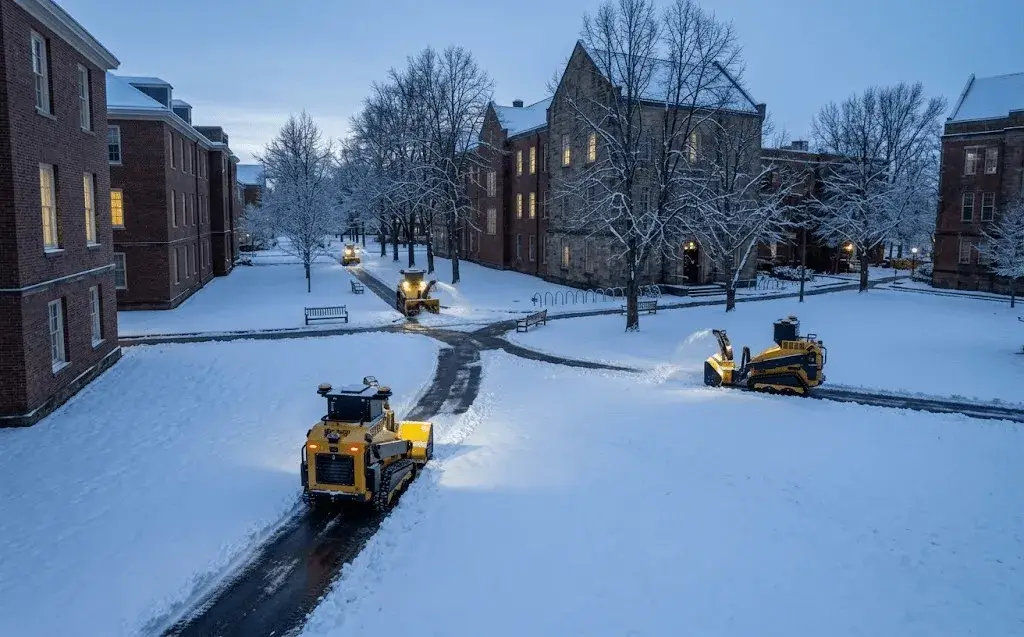
The labor market for crews operating in severe conditions (−22°F) continues to shrink. Autonomous units deploy on schedule at the exact hours contractors struggle to staff.
Snowbotix brings autonomous, documented outdoor maintenance to commercial properties, public infrastructure, industrial sites, defense environments, and high-risk roadside operations.
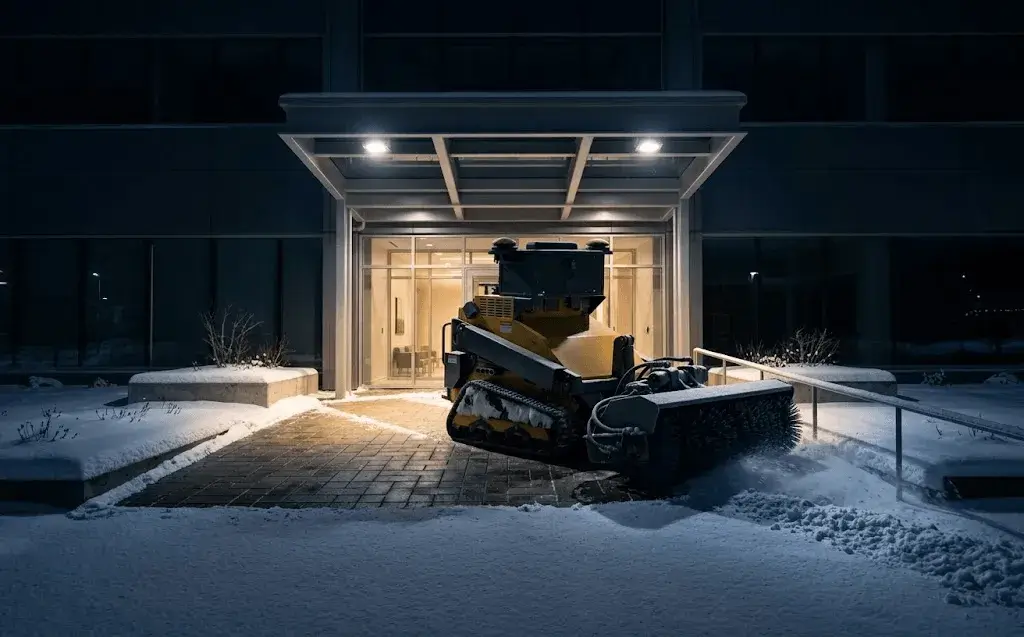
COMMERCIAL & INSTITUTIONAL
On a commercial or institutional site, an uncleared path is not an inconvenience. It is a slip-and-fall claim, a delayed ambulance, a student who cannot reach a lecture hall, or a tenant citing the lease. The obligation is continuous and the exposure is personal.
The labor market for crews operating in severe conditions (−22°F) continues to shrink. Autonomous units deploy on schedule at the exact hours contractors struggle to staff.
When a slip-and-fall claim surfaces 18 months later, timesheets are merely subjective testimony. A timestamped, GPS-verified route provides indisputable legal proof of service.
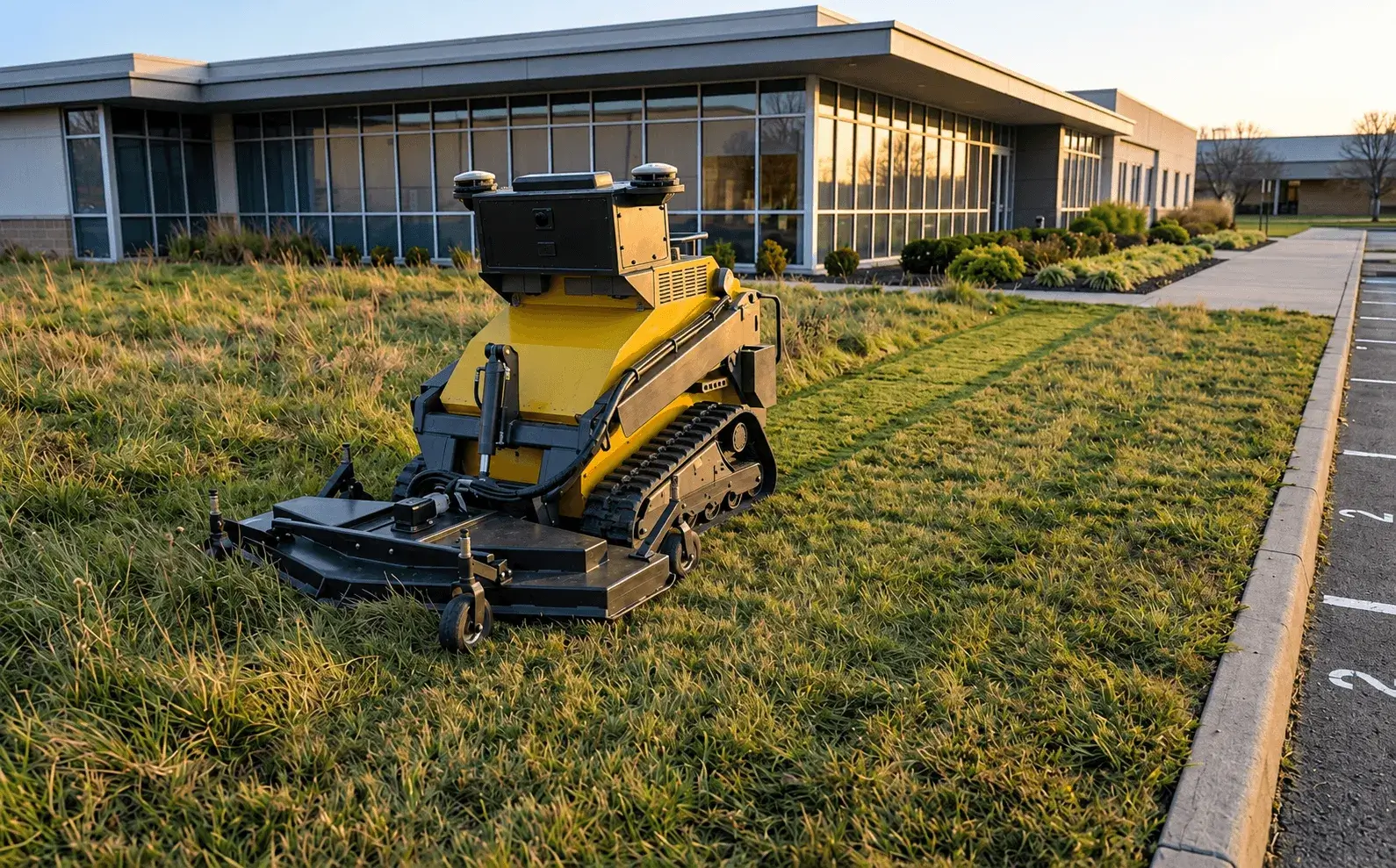
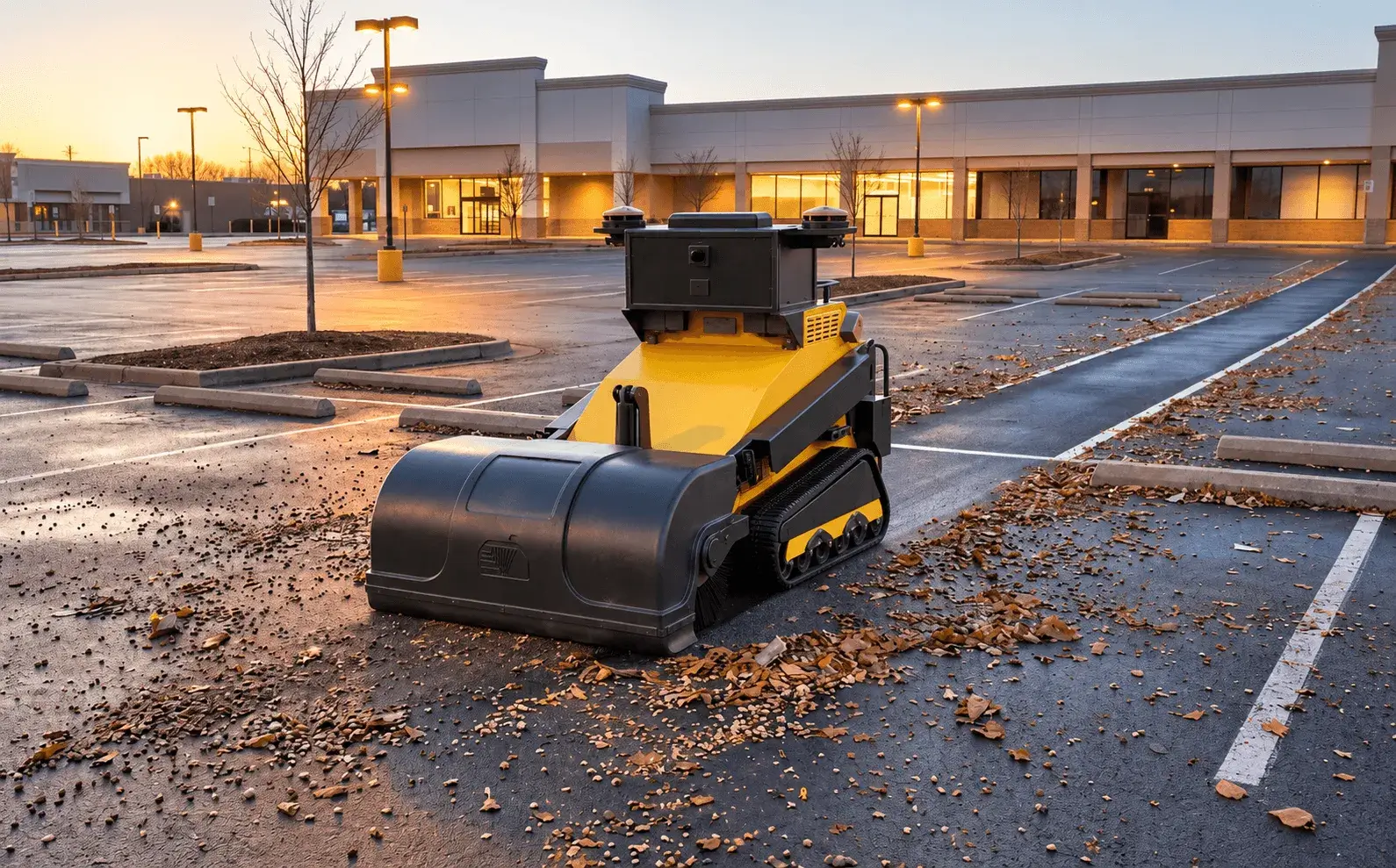
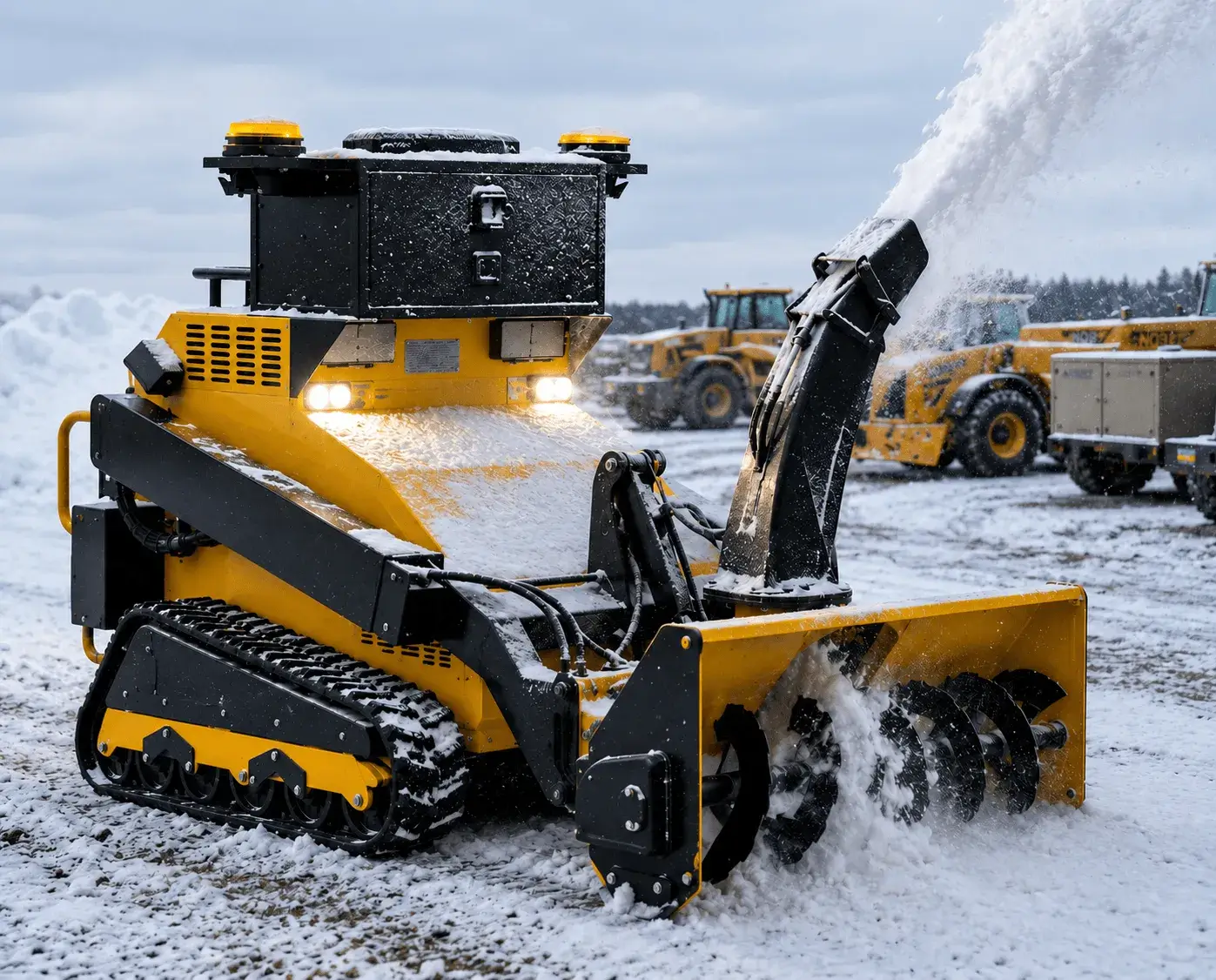
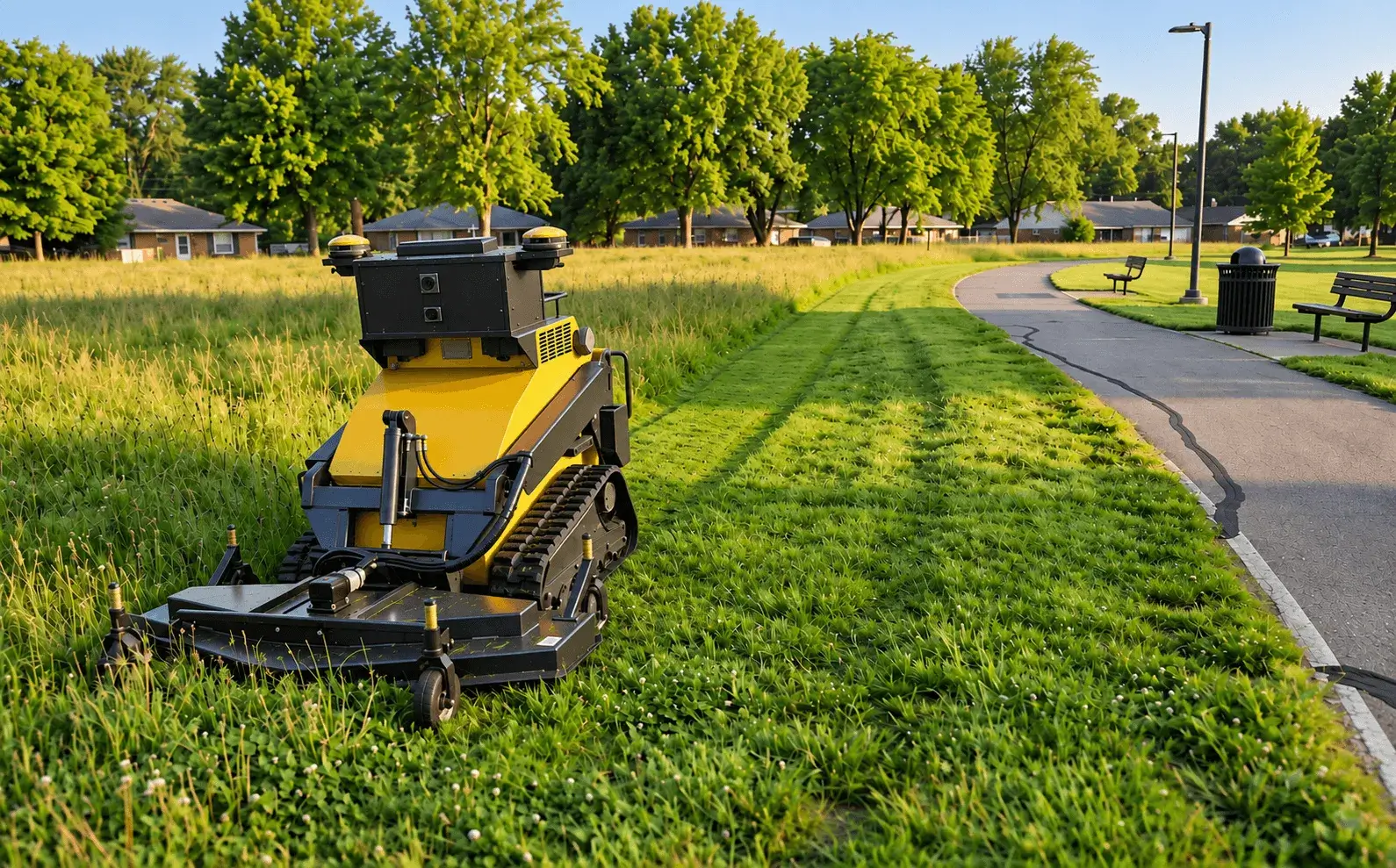
Single-use snow machinery sits unused eight months a year. This platform runs continuously across all four quarters: snow clearance in winter, sweeping and mowing the rest of the year.
Protect against $100,000+ slip-and-fall liabilities and eliminate unpredictable storm surge pricing with portfolio-wide standard coverage.
Keep emergency bays, ambulance routes, and patient walkways held to bare pavement with automated compliance logging for facility accreditation audits.
Ensure continuous ADA-accessible route compliance across distributed campuses before morning classes, supporting institutional zero-emission targets.
Guarantee storefronts and parking entries are cleared prior to opening hours, backed by legally defensible coverage records for tenant SLAs.
PUBLIC SECTOR
Public-sector maintenance is performed in view, funded from scrutinised budgets, and measured against published standards. The work is judged not only on whether it was done but on whether it was done equitably, on time and demonstrably.
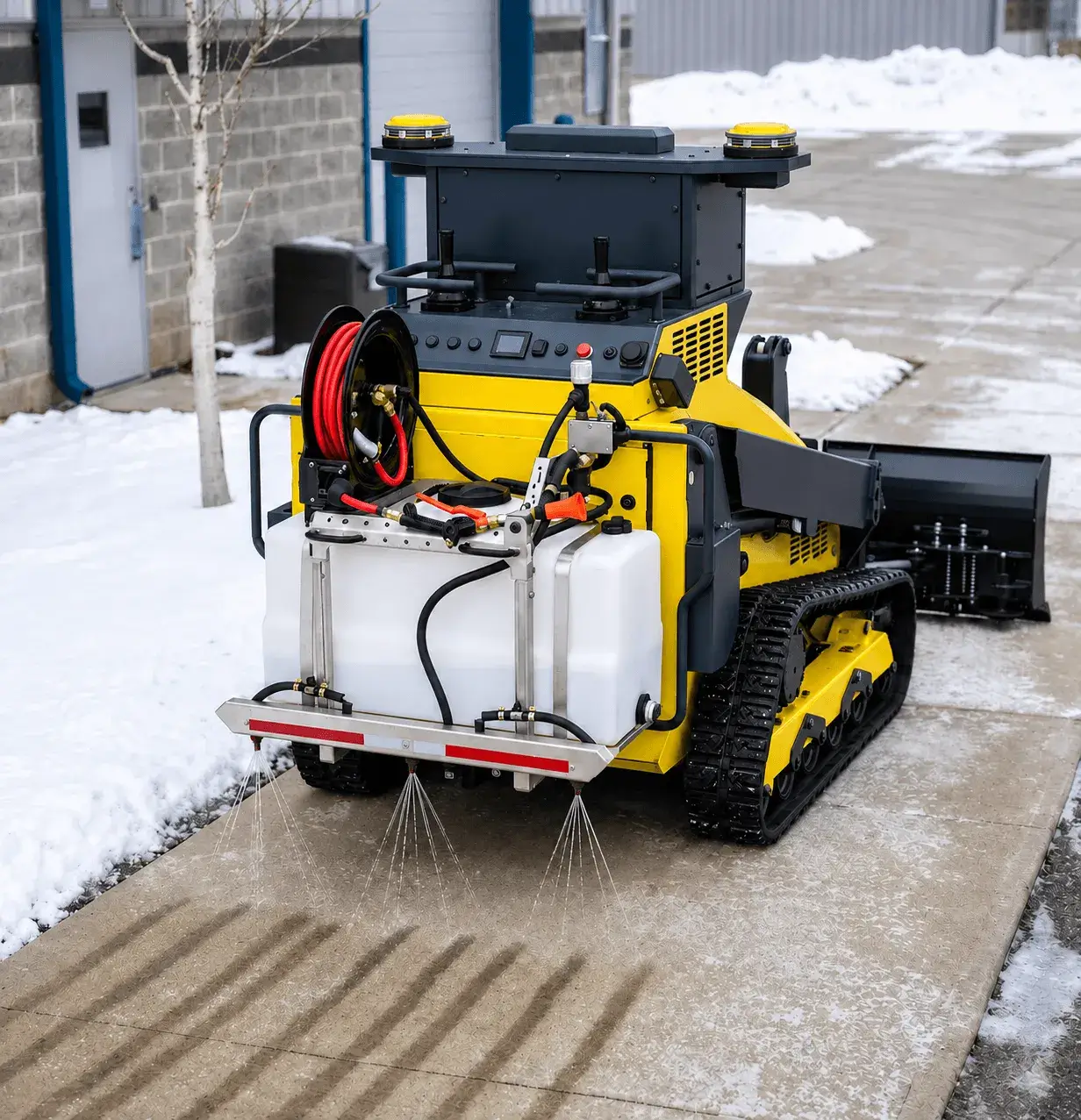
Council inquiries, public complaints, and FOIA requests demand immediate proof of what was cleared, when, and to what standard. Automated per-pass records provide verifiable data in minutes rather than relying on delayed crew recollections.
Manual routing tends to prioritize squeaky wheels, concentrating resources only where resident complaints originate. Programmed autonomous routing delivers consistent, equitable coverage across the entire network on a fixed cycle, including uncalled streets.
Expanding physical municipal networks with large capital equipment depreciates rapidly and strains annual public budgets. A predictable operational subscription scales easily with season and fleet demand while eliminating fuel, overtime, and insurance spikes.
Maintain strict network-wide clearance SLAs for arterials and pedestrian walkways with zero-emission electric fleets. Protect crew safety during extreme conditions while generating real-time GIS compliance maps for council and public transparency.
Turn routine year-round maintenance into a living geospatial data feed. Every pass sweeps, cuts, or clears while refreshing asset condition reports to maintain transparent standard-of-care documentation across civic infrastructure.
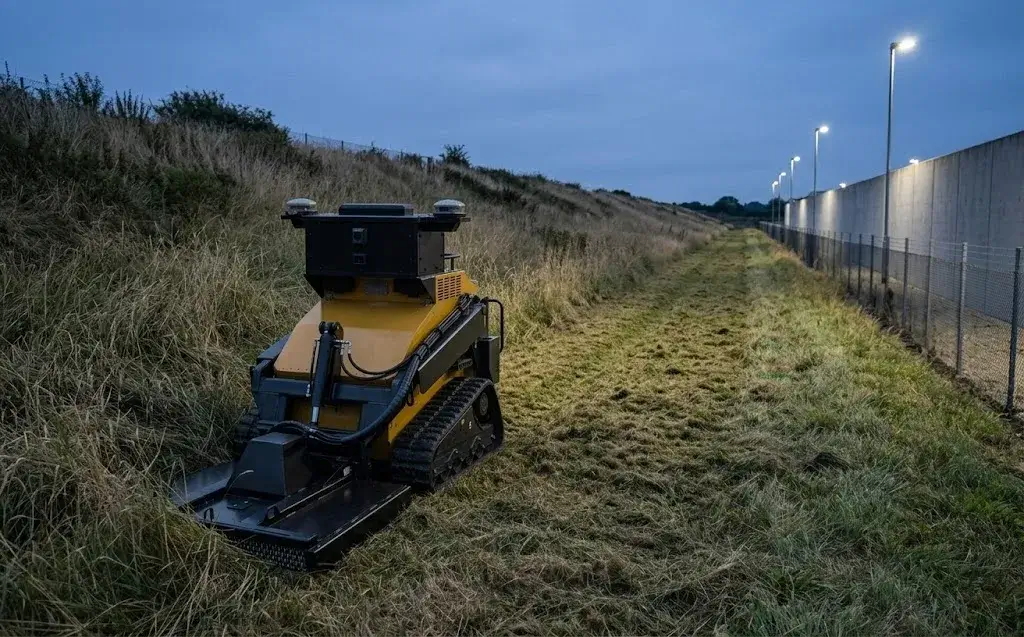
Eliminate severe summer mowing backlogs caused by seasonal hiring shortages. Maintain trails, turf, and steep embankments on a dependable cadence, adding winter access paths without expanding headcount budgets.
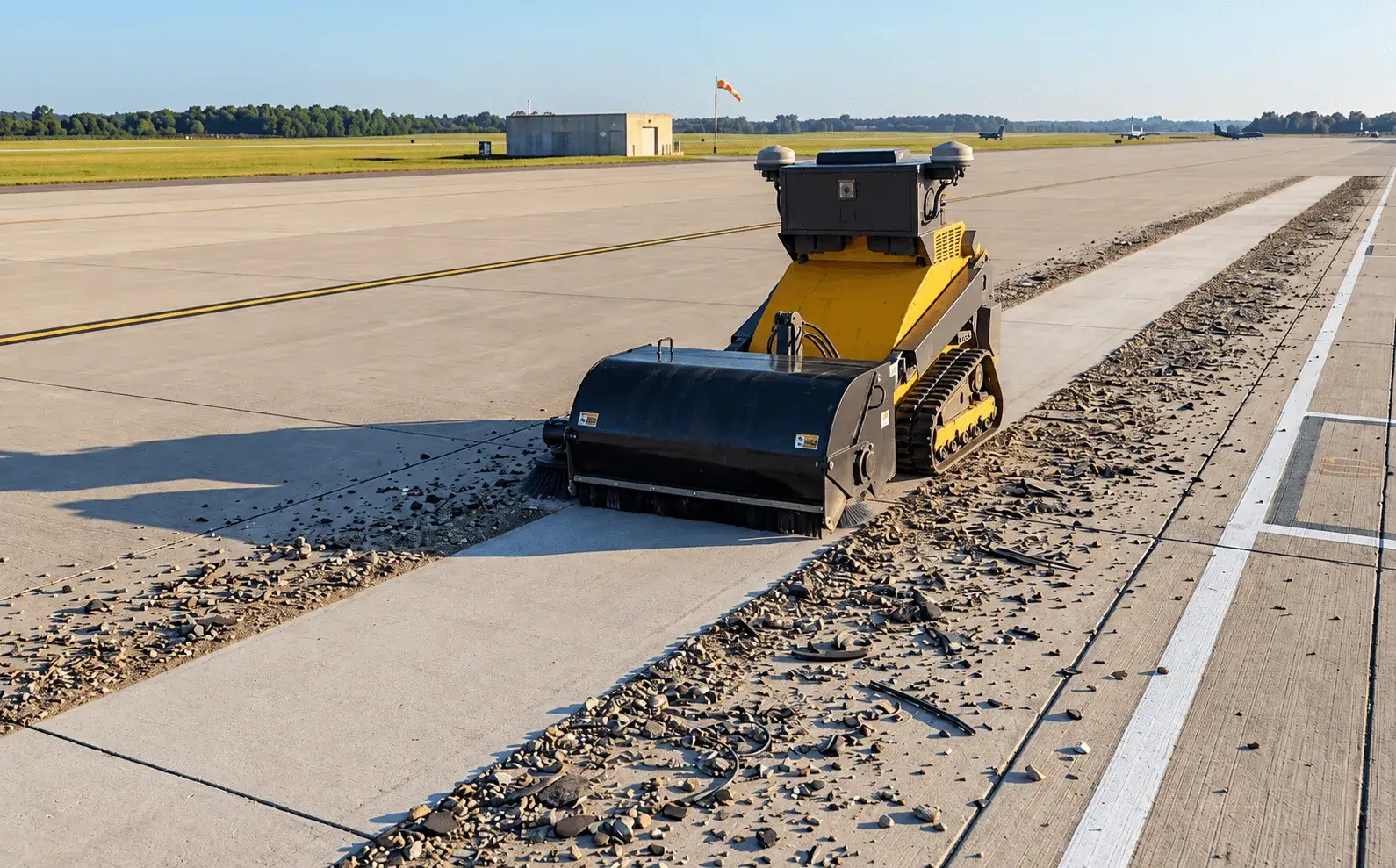
Ensure continuous Foreign Object Debris (FOD) sweeping and wildlife hazard vegetation control across operational movement areas. Log automated, compliance-grade records to seamlessly support FAA Part 139 airfield safety audits.
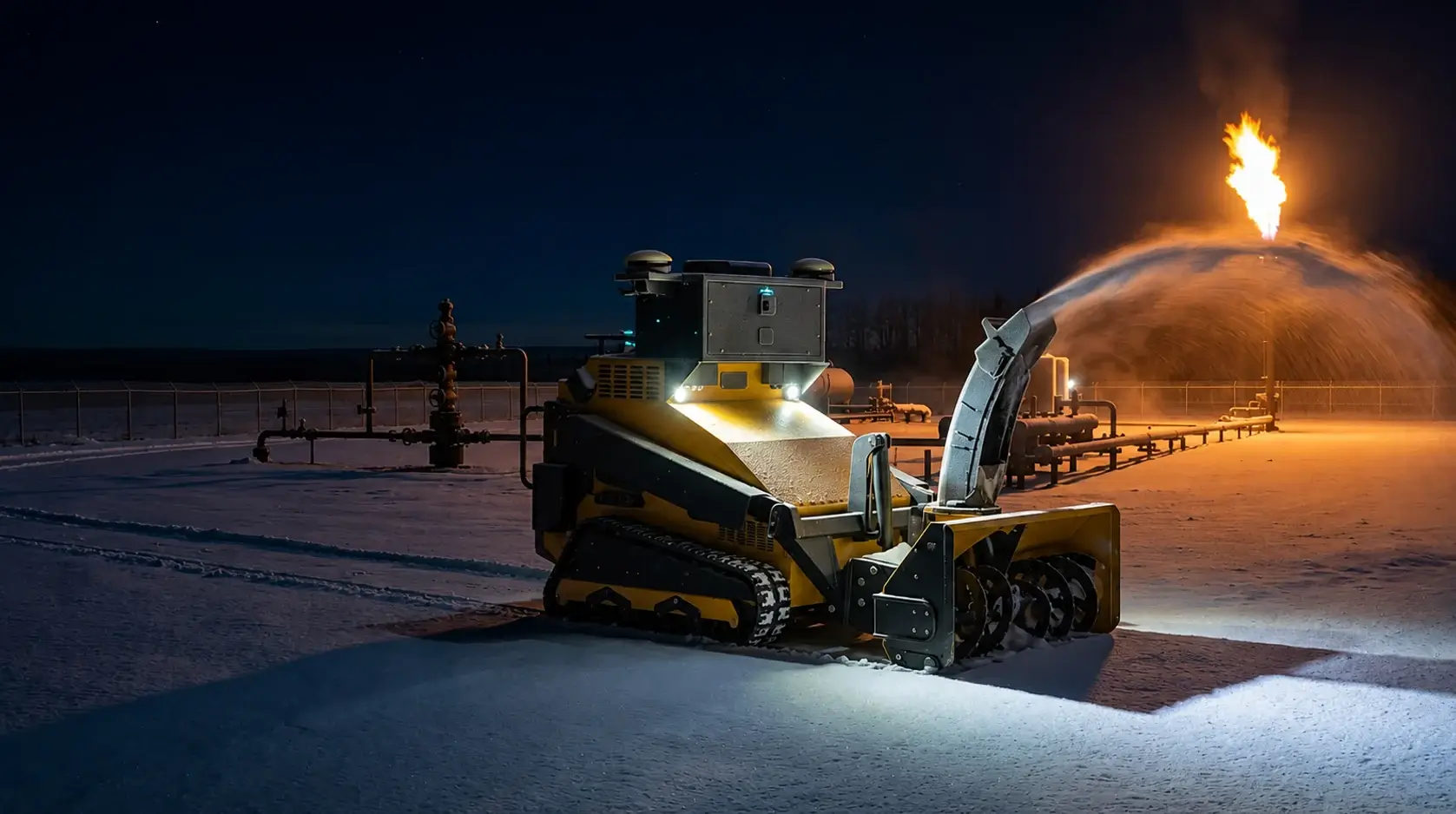
INDUSTRIAL
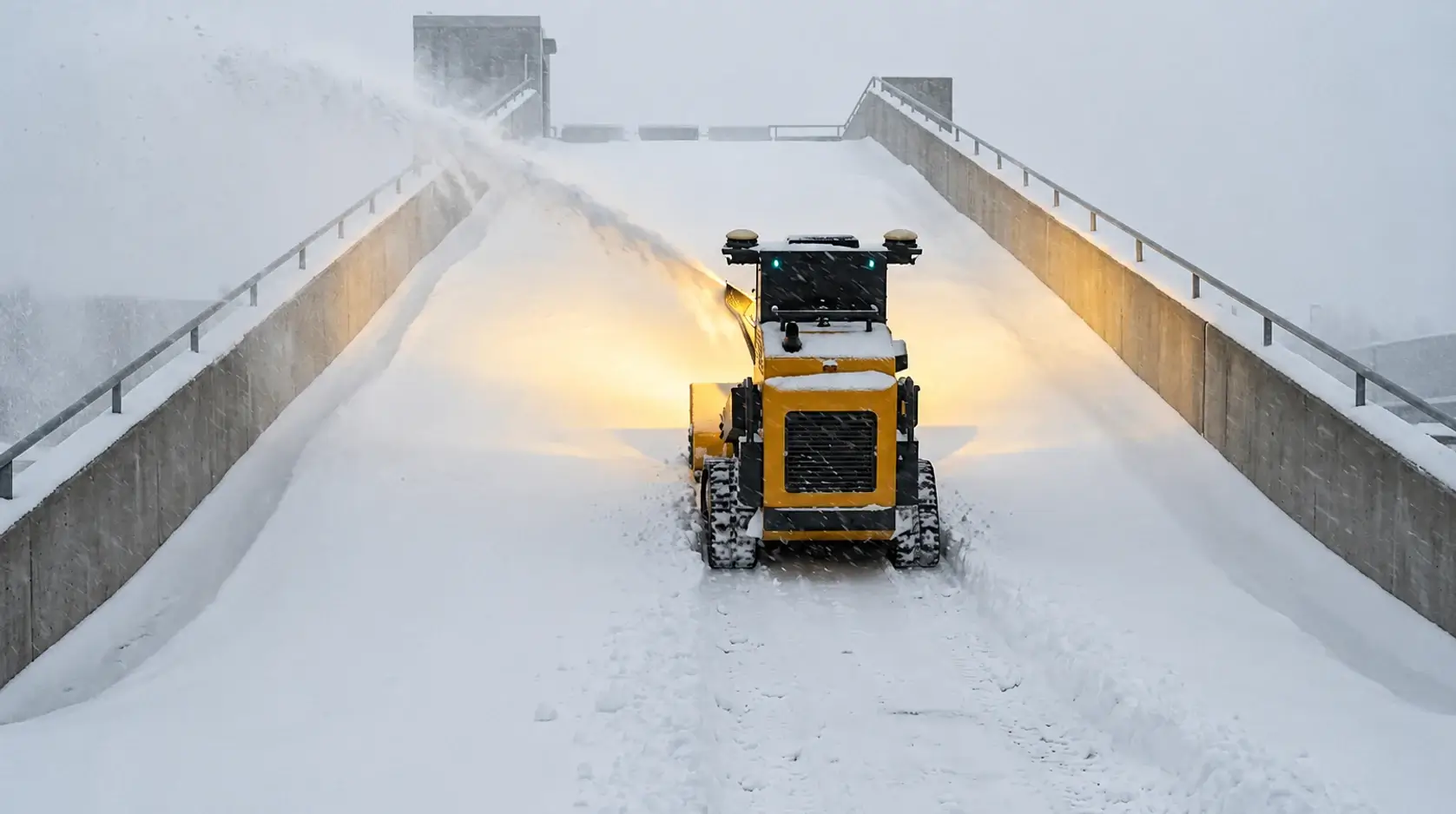
Most autonomous equipment is validated on sites with reliable GNSS, dependable cellular and grid power at the perimeter. Industrial sites routinely have none of the three, and the work still has to happen.
Heavy structural shielding, metal interference, and remote geography routinely degrade GNSS signals. Visual odometry and inertial navigation fallbacks ensure operations continue uninterrupted without relying on a constant satellite fix.
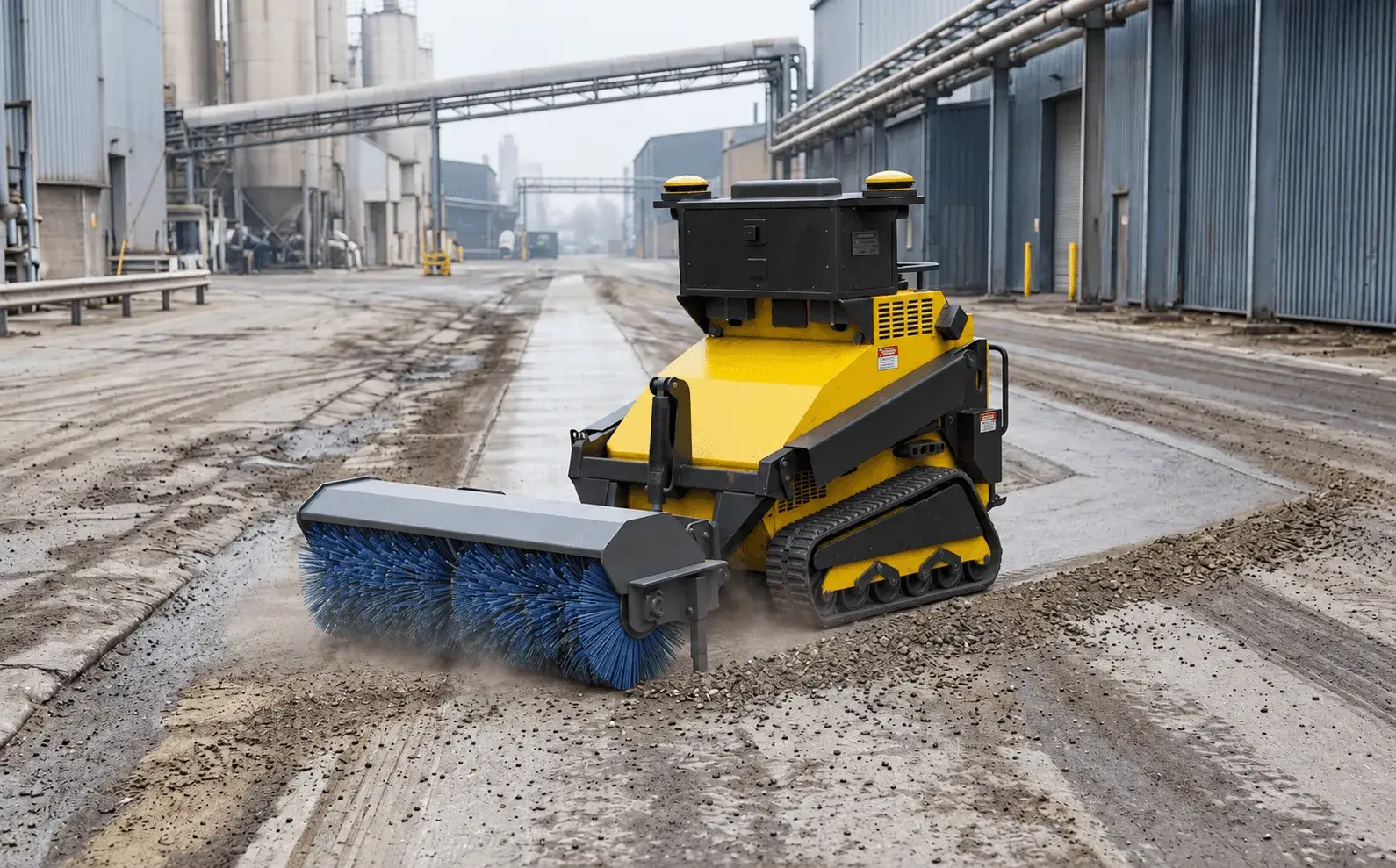
Production lines, plant logistics, and active facilities cannot pause for grounds maintenance. Autonomous units operate safely around 24/7 plant traffic, shift changes, and active logistics lanes without interrupting output.
Dispatching manual crews to outlying perimeter roads, utility corridors, and remote compounds carries extreme recurring costs. Autonomous systems eliminate costly travel, remote rotation logistics, and hazardous crew exposure in severe conditions.
Maintain vegetation and perimeter security around live substations and solar arrays without placing manual crews in high-voltage zones. Retractable flail cutters protect solar glass while onboard thermal sensors identify wildfire hazards and equipment anomalies before outages occur.
Eliminate extreme camp, rotation, and fly-in labor costs by maintaining remote haul-roads, access ways, and perimeter zones autonomously. Reduce severe winter HSE exposure while automatically capturing environmental and road-condition compliance data.
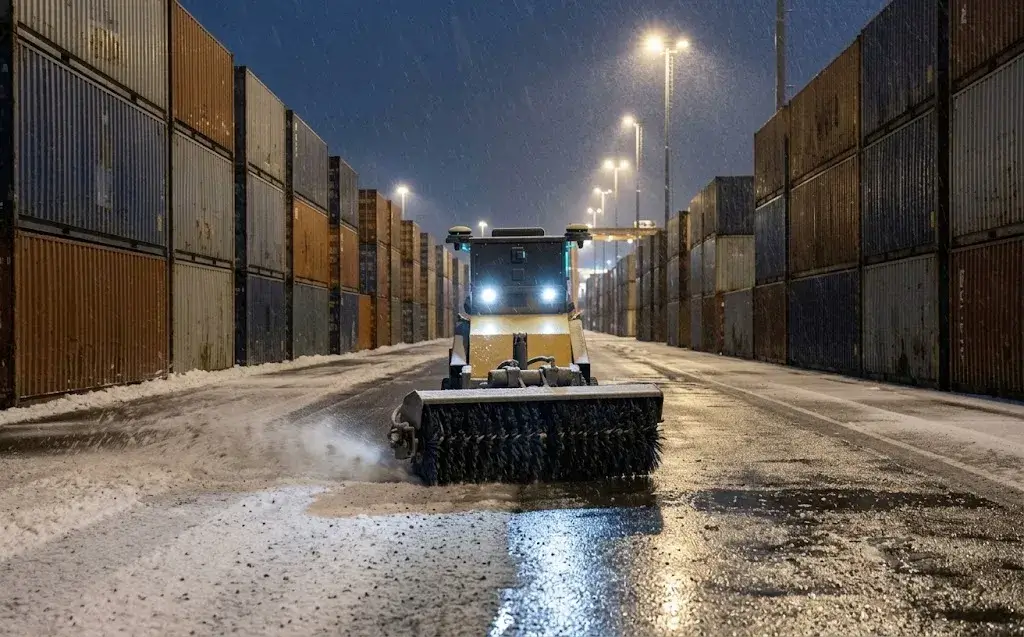
Prevent unrecoverable dock delays by maintaining yard lanes, trailer paths, and terminal surfaces around the clock. Keep shipping hubs clear and de-iced ahead of early-morning shifts with verified proof-of-clearance logs.
Ensure employee and transport safety across sprawling industrial plants with continuous, documented hardstanding sweeping and snow clearance. Keep shipping docks and perimeter roads clear without scaling on-site maintenance headcount.
Deploy full-scale snow, sweeping, and access maintenance at unstaffed, off-grid locations with zero fixed infrastructure. Self-powered heated docking hubs, satellite connectivity, and battery self-heating systems operate dependably across −40°F where diesel equipment fails.
DEFENSE & GOVERNMENT
Installation maintenance is not a benign application of the same technology. It runs where GNSS is contested, connectivity is restricted by policy rather than coverage, and the data a machine produces is itself a controlled artifact.
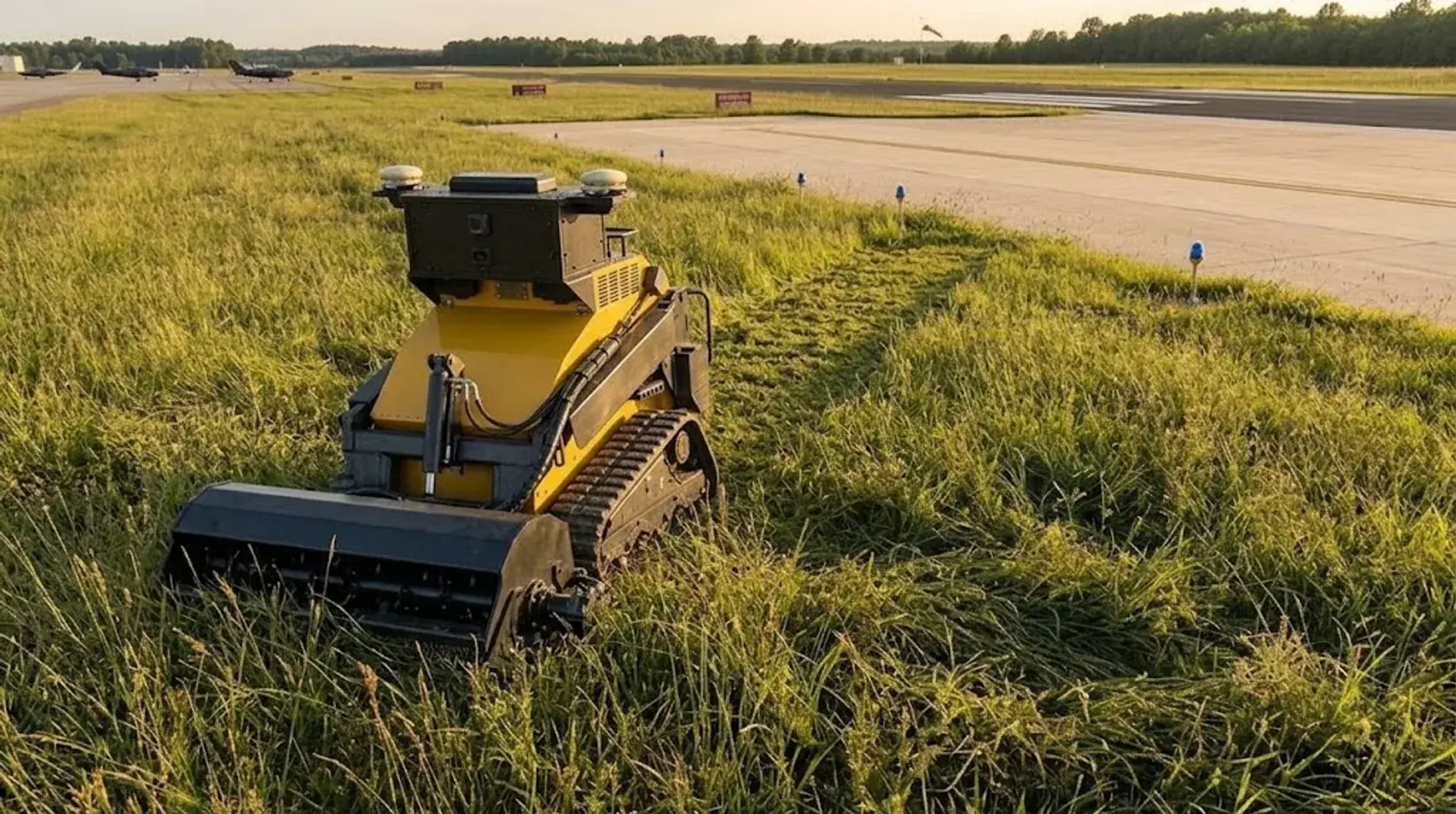
Electronic warfare, spoofing, active jamming, and heavy structural shielding are treated as baseline operating conditions rather than edge cases. Onboard inertial navigation, visual odometry, and local geofencing ensure tasks execute uninterrupted without external satellite signals.
Autonomous units do not rely on constant off-board tethering to navigate. If control links or network channels drop, the platform independently completes its programmed route and queues encrypted logs until secure connectivity is re-established.
All telemetry, sensor data, and route logs conform strictly to military data-handling protocols. Data residency, retention periods, and access governance are fully configurable on-premise rather than governed by commercial defaults.
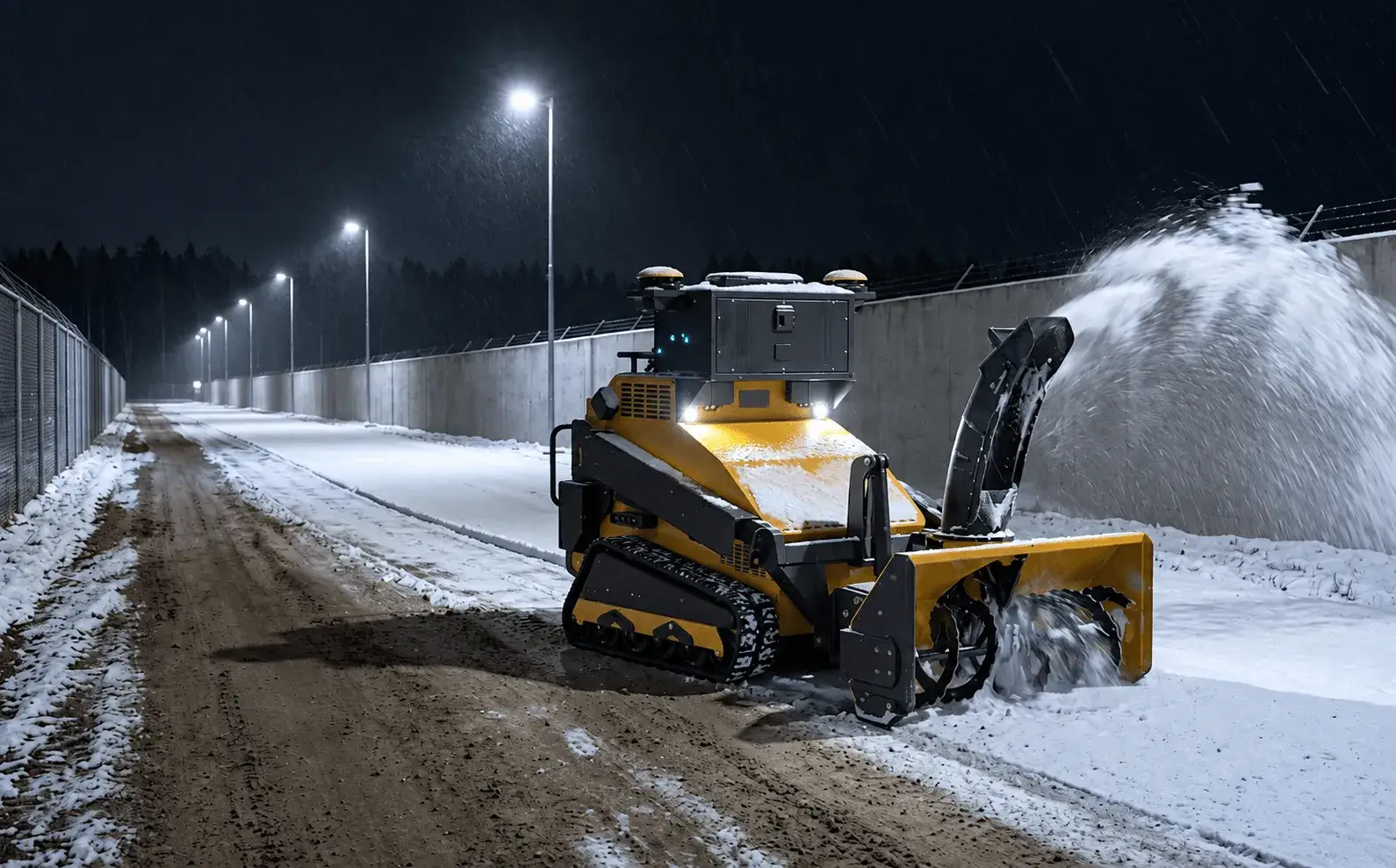
Maintain critical infrastructure (including flightline aprons, staging areas, and access roads) during severe weather and blackout conditions without on-site personnel. Execute automated Foreign Object Debris (FOD) sweeping, snow clearing, and access continuity with end-to-end AES-256 encrypted logs for verified mission readiness.
Eliminate the high mission opportunity cost of diverting service members to manual grounds and perimeter maintenance. Maintain expansive base grounds, clear security fence lines, and manage winter access routes autonomously with systems purpose-built for secure, GPS-denied environments.
STATE DOT & ROADSIDE
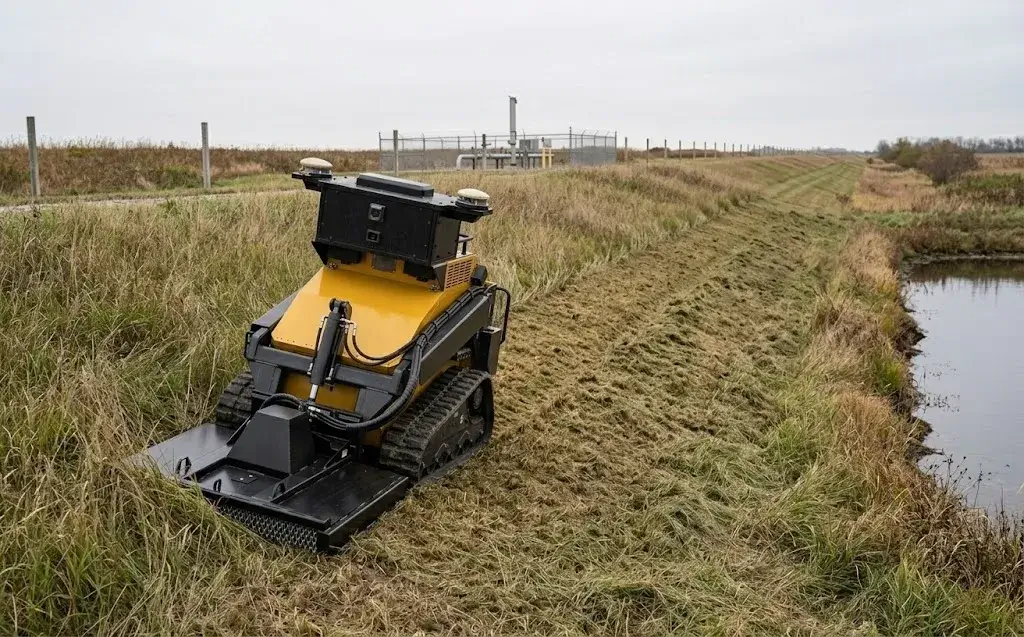
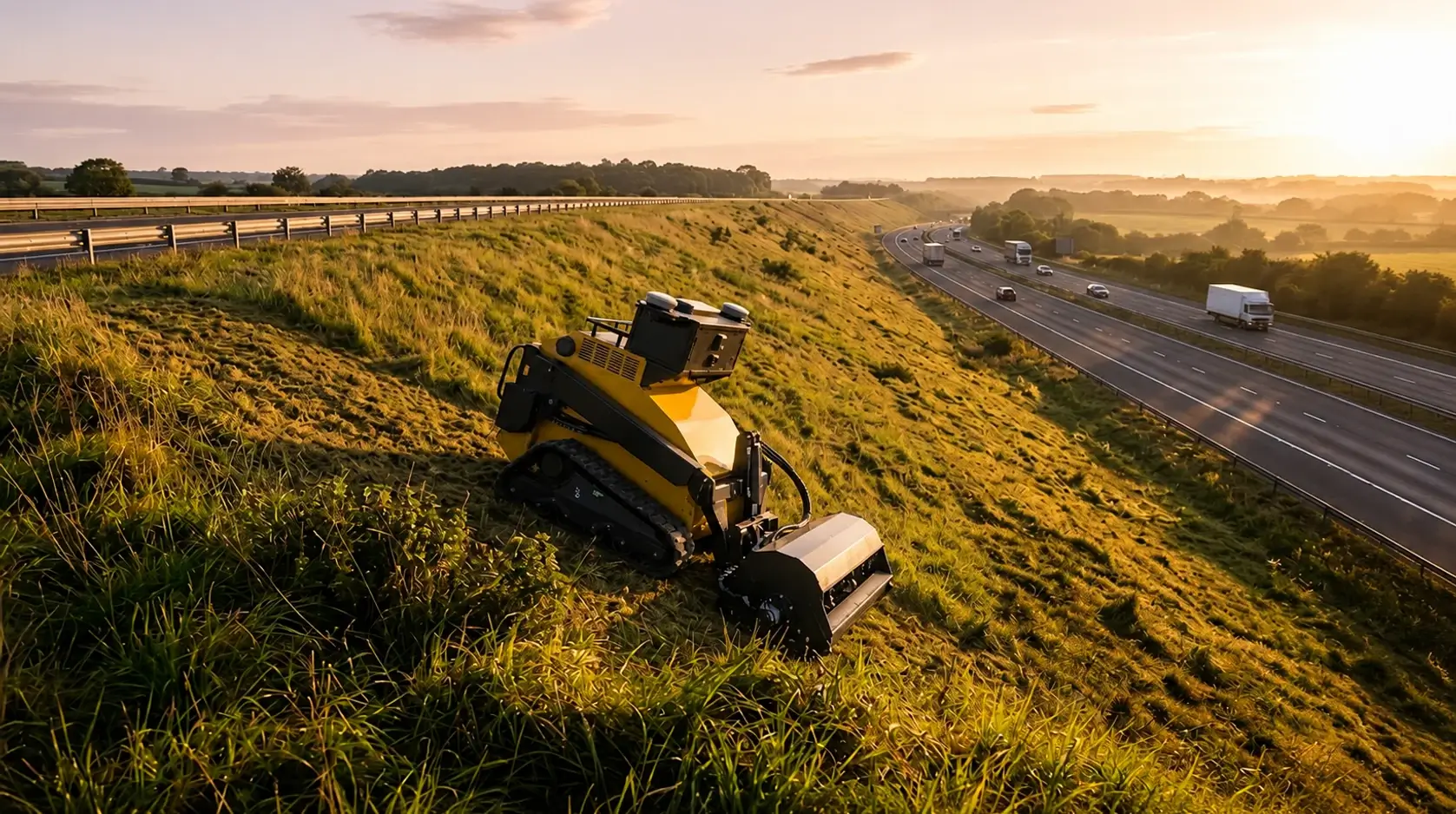
State DOT roadside work concentrates the highest-risk mowing in the country: embankments, medians and rights-of-way on gradients that put an operator on a side-slope beside live traffic. Snowbotix works those gradients autonomously, inside geofenced boundaries, and documents every pass against the pay item.
Roadside maintenance is defined by steep gradients, embankments, and medians where conventional ride-on mowers present critical rollover risks and worker safety exposures. Autonomous platforms operate across steep contours without putting human operators on dangerous side-slopes.
Roadside work is evaluated and paid against formal, measured pay-item specifications rather than general facilities budgets. Per-pass GPS and timestamp data automatically reconcile completed quantities to contract items, turning subjective inspections into auditable proof.
Roadside maintenance scopes are strictly warm-season contracts without winter snow obligations. Sizing fleets specifically for intermediate-to-small slope and brush-clearing classes delivers rates that sit below incumbent manual contractors.
Maintain highway embankments, interchange infields, and medians along active carriageways safely inside geofenced perimeters, eliminating the need for shoulder closures and hazardous manual string-trimmer or ride-on crews.
Win competitive formal solicitations for intermediate and small-machine slope scopes with lower operational unit rates, using heavy rotary brush cutters and continuous, dispute-free pay-item documentation across multi-year contract terms.
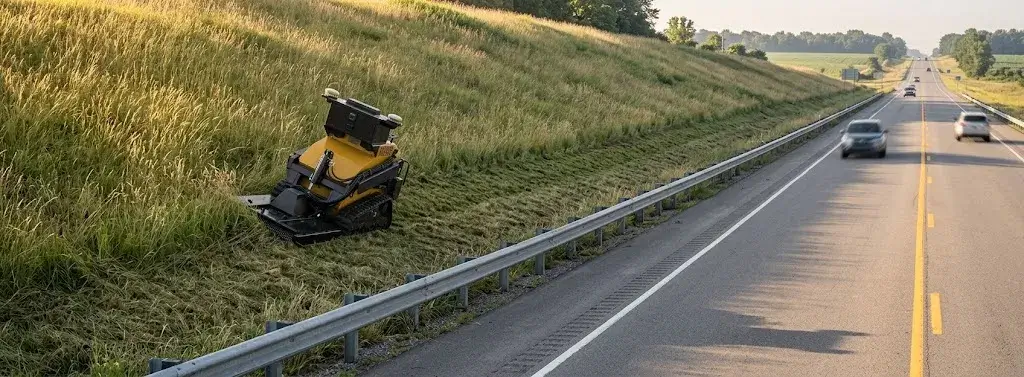
Five sectors, one machine, one operating layer. What changes between them is the attachment, the route, and who reads the record, not the platform underneath.
A Snowbotix site assessment maps your routes, operating conditions, infrastructure, and service requirements to the right platform and attachment configuration.