Torque-First. Built for the Grade.
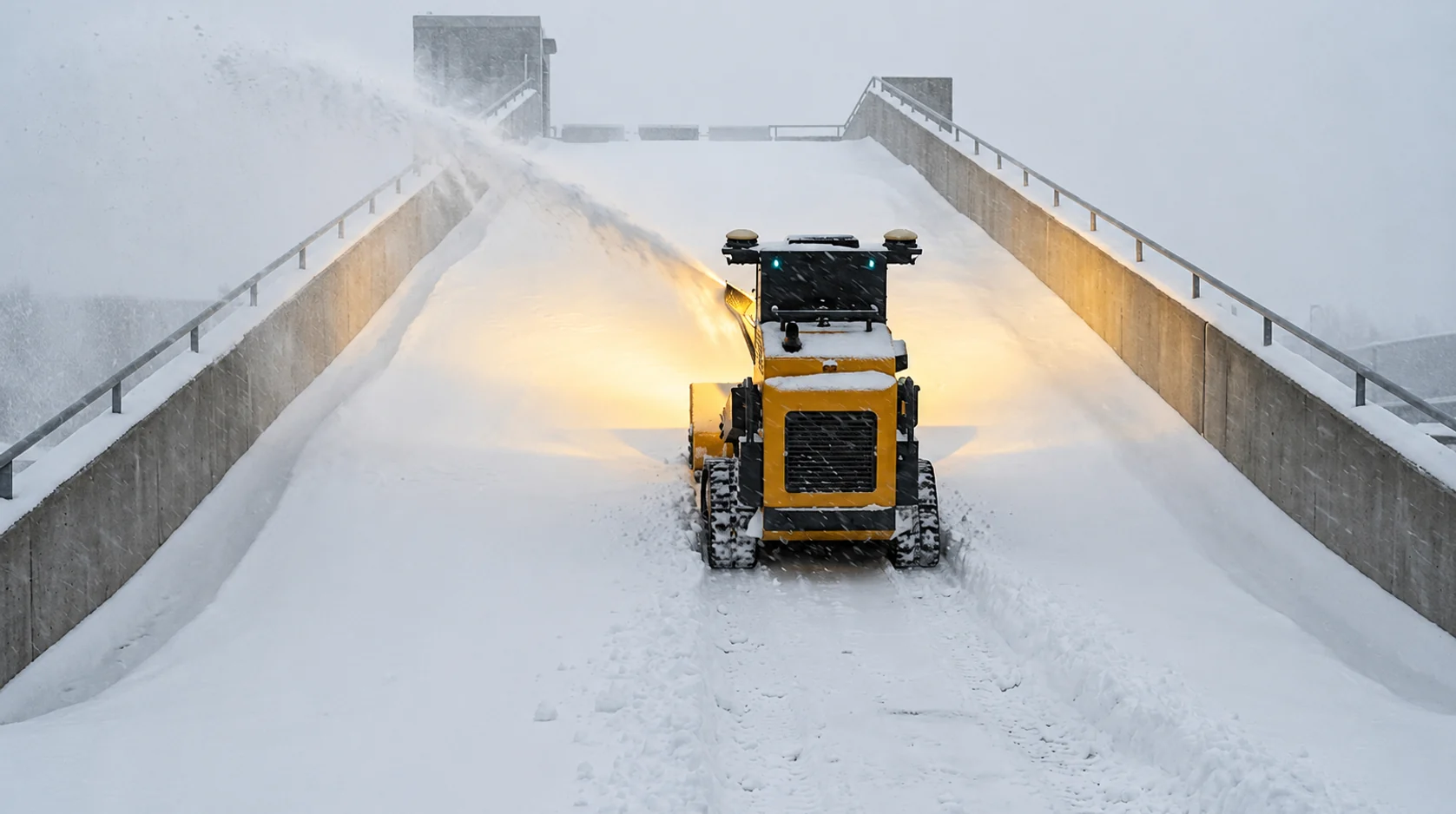
The SMUR X1 drivetrain was engineered around one philosophy: in extreme outdoor environments, torque is operational capability and speed is secondary. The 72V high-torque architecture delivers the climbing ability, traction, and load-handling to operate reliably on snow-packed grades, sheet ice, and uneven compacted terrain that would stop a lighter-duty platform entirely.
72V Architecture
Why voltage matters in extreme operations.
72V was chosen because at the power levels required for sustained autonomous outdoor maintenance, higher voltage enables lower current draw for equivalent torque, directly reducing thermal loading in the drivetrain, smaller conductor cross-sections, and more predictable behavior under sustained high-load conditions like steep grade climbing with a blower or plow deployed. At −40°F, thermal management of windings and controllers is a real constraint; 72V gives headroom to manage it.
The torque-first philosophy is visible throughout. Motor selection prioritized peak torque over peak speed. Gearbox ratios were optimized for the worst-case deployment scenario, not the average. Maximum autonomous speed is capped by the Autonomy-in-a-Box (AiB) safety envelope, not motor capability. The SMUR X1 is physically capable of higher speeds than it is permitted to use without operator authorization.
Key Metrics
Built for load, grade, and conditions.
Grade & Traction Performance
Built for the grade. Designed for the ice.
Grade performance separates operational equipment from experimental platforms. Any robot can operate on flat, clean, groomed surfaces. The SMUR X1 was specified to maintain full mission capability on snow-packed grades approaching the limits of commercially available tracked equipment, with an active payload on the MAI interface. Grade is a design parameter, not a limitation.
Traction in snow and ice requires more than torque. It requires intelligent distribution at the wheel or track interface. The drivetrain control system modulates torque at individual drive units in response to traction feedback, preventing slip before it develops while maintaining progress through the highest-resistance conditions. On sheet ice, it manages torque within the available traction budget rather than relying on surface friction alone.
Traction Architecture
Snow. Ice. Gravel. Grade. The SMUR X1 handles all of it.
The drive system is validated on compacted snow, packed ice, wet gravel, wet tarmac, and mixed transition surfaces: the real-world surfaces of actual sites, not test tracks. Validation included sustained operation on brine-treated surfaces (the most slippery condition likely in a commercial deployment) and steep gravel grades with a plow deployed.
Individual drive-unit torque modulation is managed at 490Hz in coordination with the Autonomy-in-a-Box (AiB)'s IMU tilt and motion data. Traction events are logged with timestamp, surface estimate, modulation response, and speed, building a dataset for predictive traction management in recurring deployment environments.
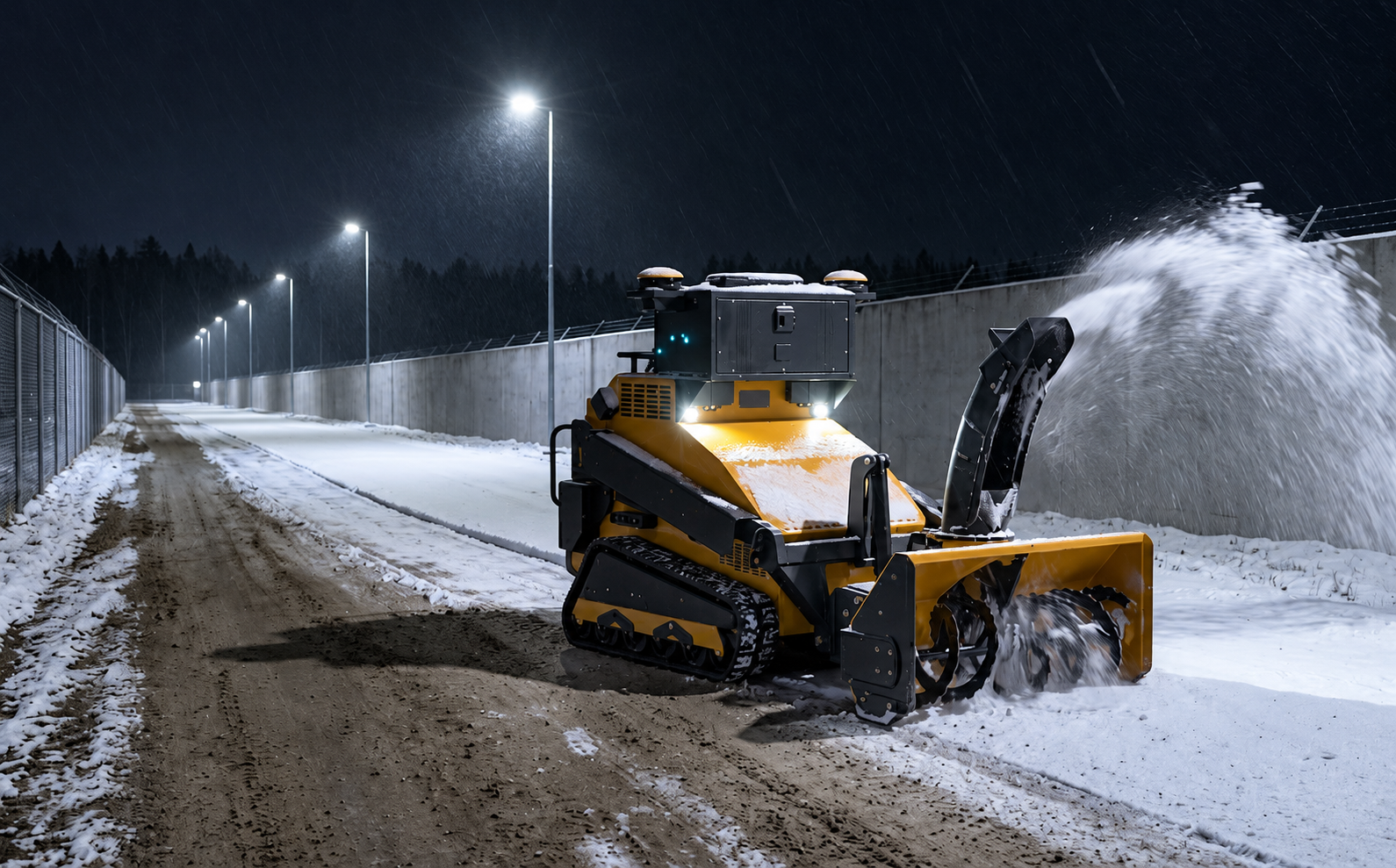
- Validated on compacted snow, packed ice, brine-treated surfaces, and steep gravel
- Individual drive-unit torque modulation: slip prevention before it occurs
- IMU-integrated tilt management: maintains traction on grade with active payload
- Traction events logged for predictive management in recurring environments